
Certified quality management system
Hipot tester
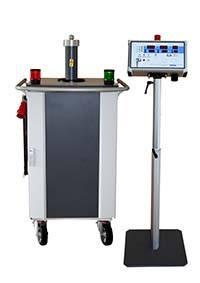
The compact design of the ST9200 hipot tester makes it suitable for use in almost every area and scenario. The wide variety of possible interfaces and uses include as an RS232, a handler, remote I/O, USB, or GPIB, this hipot tester is ideally suited for use in all automatic test systems. The tester is also perfect for use in a manual workstation, this would utilise the warning light and the safety test probes designed to be operated in a two-handed system. All of the 9200 hipot tester are built with the ARC detection feature, which will automatically micro-discharge a partial part of the insulation. The ST9200 also allows you to control the high voltage using a ramp function, conveniently located on the tester. GO-NOGO-Comparators are projected on the display using a red/green LED, optional the built-in speaker will emit an acoustic warning. The hipot tester houses a large LCD display to offer clear reading of the values from all angles. The ST9201S also has a built-in switch matrix with 8 channels which allows you to switch the high voltage from one point to another.
Important information about high-voltage testers can be found here:
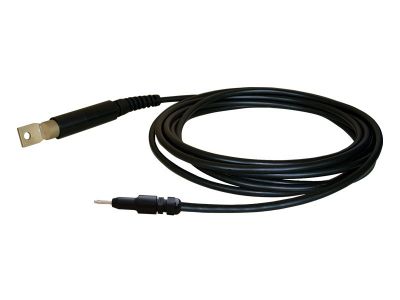
- HV-Cable, one-pole
- Length 2 m
- HV-plug HVC50KS-B02
- 50 kV AC / 70 kV DC, max. 10 A
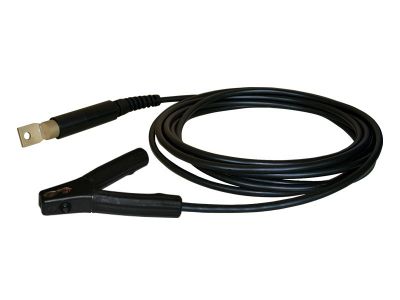
- HV-Cable, one-pole
- Length 2 m
- HV-plug HVC50KS-KL02 with contact clamp
- 50 kV AC / 70 kV DC, max. 10 A
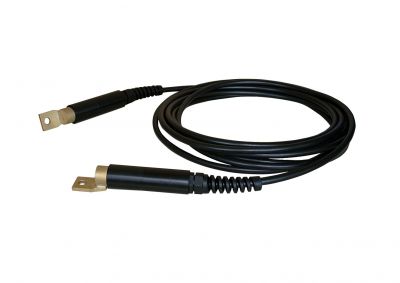
- HV-Cable, one-pole
- Length 2 m
- HV-plug HVC50KS-KS02 with 2 solid cable shoe
- 50 kV AC / 70 kV DC, max. 10 A
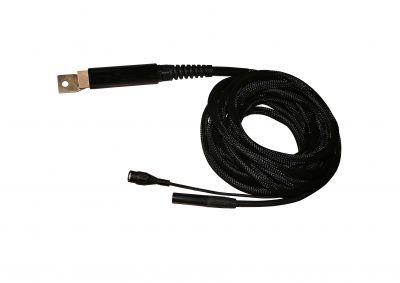
- PE test lead, 2-pole, black (D = 8.5 mm)
- Solid cable lug for contacting or screwing on, e.g. to a contact clamp or a coupling prism
- Source path with 6 mm plug for plugging into the test instrument (single-pole)
- Sense path with BNC plug for plugging into the test instrument
- Max. operating current: source path 100 A AC
- Selectable cable length: 2 m, 3 m, 5 m or 10 m (other cable lengths on request)
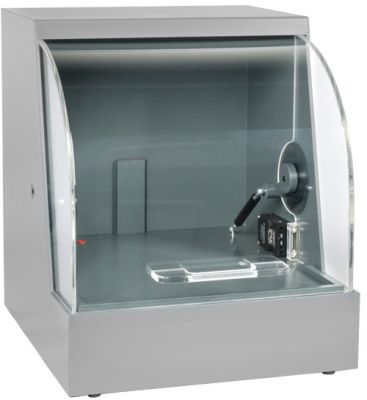
- Test cage with transparent hood for test instruments of the 36 series
- Fully assembled with safety switch (2 paths)
- Positive protection against contact per EN 50191
- Gas springs for damping and end-position damping
- Interior (W x H x D): 330 x 350 x 450 mm
- Test connections HV1 and HV2/PEX1 with safety sockets and quick-action test clamps
- Connecting leads for the test instrument included (safety circuit, 2 x HV cable, 2 m)
- IP30, weight: 14.5 kg
- Max. rated values HV/ISO: 7 kV AC / 10 kV DC, max. 10 A
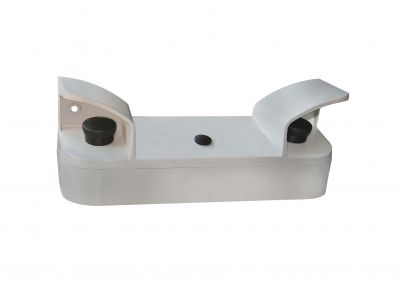
- Two-hand control for test stations with ergonomic control buttons
- Standard-compliant spacing and control recesses
- With supply cable and connector plug for UH36 and UX36
- Mains supply cable length: 1.5 m
- Selectable supply cable length: 2.5 m or 5 m
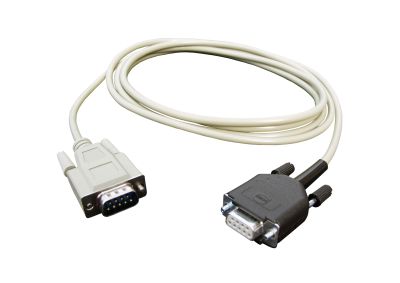
- Connection cable for remote control of the test device via PC or PLC
- 9-pin SUB-D, plug / socket
- Cable with RX/TX crossed
- Remote control via DataView, ASCII commands or custom application (ETL driver: DLL, ACTIVE-X, LabVIEW)
- Selectable cable length: 2 m, 5 m or 10 m

- Safety circuit connector UH36, unassigned, for customer-specific assembly
- 3 different safety circuits can be implemented through wiring
- Testing with test guns: 2 bridges (Pin 4-5 and Pin 6-7)
- Testing with test cage or two-hand operation: 2 normally open contacts (Pin 2-6 and Pin 3-5)
- Automation solution: 2 normally open contacts / bridges (Pin 1-6 and Pin 5-8)

- Replacement key for the mains switch, for the Series 36
- Scope of delivery: 2 keys
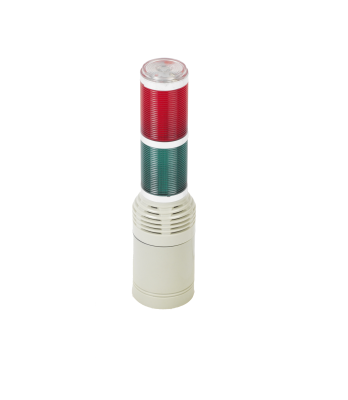
- Warning light incl. installation of the interface on the high-voltage tester
- Devices: ST9200 series, ST9300 series
- Cable length: 1.5m
- Standard: EN 50191
- Light: Red/green
- Function: rd HV ON/gr HV OFF
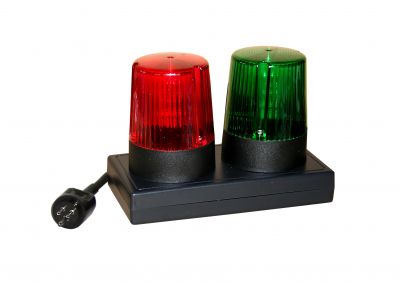
- Devices: hipot testers 36 series
- Signal lamp: red / green
- Conforming to all standards: VDE0104, EN50191
- Status:
- READY FOR OPERATION
- READY TO SWITCH ON
- IN OPERATION
- Voltage: 230V
- Cable length: 2m
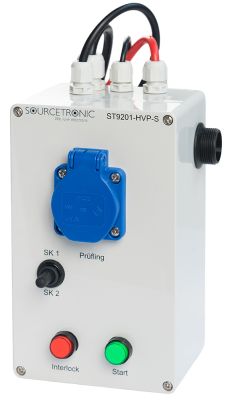
- Contact unit for connecting an HVP06N test pistol to the ST9201
- 1x Schuko socket
- 1x push-button switch for closing the safety circuit
- 1x pushbutton switch to start the high-voltage test
- Voltage: 5 KVAC, 6 KVDC
- Ergonomic design
- Highly insulating special plastic
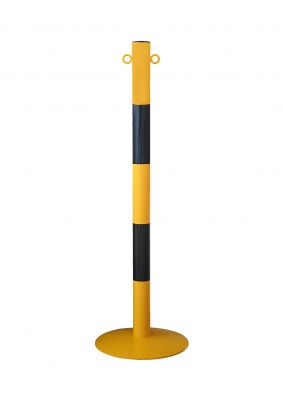
- Portable posts chain
- Convex base plate
- Colour: Yellow-Black
- Two-parts
- Height: 1100mm / D=32cm
Sourcetronic Hipot Tester ST9201
In this video you will be introduced to the high voltage tester ST9201, whose functions and typhus.
How does an Hipot Tester works?
High-voltage tests are performed for appliances with protection classes I (with a PE protective conductor) and II (without a PE protective conductor). In the process they determine whether the insulation of the current-carrying conductor and the safe distance from the device casing meet the specifications.
A high voltage test is considered "good" when no current flows. In an AC high-voltage test on a device under test with capacitive characteristics, however, a weak current will flow. Therefore, most test devices have adjustable settings. As a guide for the voltage during a high-voltage test, double the usual voltage of the DUT you are testing and add 1,000 V. For a 230-volt device, that is: 1000 V + 2 x 230 V = 1460 V (1500 V).A distinction is drawn between AC and DC high-voltage tests. The VDE (Association for Electrical, Electronic & Information Technologies) recommends the DC high-voltage test for production facilities. It is less risky and cannot damage the human heart. For job safety, the requirements of the professional association apply (to EN 50191). Additional workplace security is not needed during voltage testing with AC up to 3 mA or DC up to 12 mA. The DC high-voltage test, thus, has the added advantage that no extra precautions are required for tests of 12 mA or less.
Safety at work:
a) High-voltage tests with currents : |> 3 mA / AC or |> 12 mA / DC
- Special high-voltage test room, or
- Sealed-off area, warning sign, warning lights, test probes / test cage / two-handed operation.
b) High voltage tests with currents: class I
- No safety precautions, or
- Provisional precautions against "secondary accidents", e.g. twitches and lurches after an electrical shock.
High-voltage tests on specimens with suppression capacitors and Y-capacitors can be done with either AC or DC. The charge current measurement, as part of the DC high-voltage test, can also provide information about the built-in noise suppression capacitor.